Sthira Sukham
Abundance Without Force
Every year, many of us unknowingly step into the same mental trap. We set lofty goals at the new year, believing that reaching for the stars will motivate us. It seems reasonable at first, doesn’t it? Soon enough, familiar phrases begin to surface:
“If I can’t give it 100%, what’s the point?”
“I already messed up. I might as well stop.”
“I need to stretch for a month before I start going to yoga.”
This is what’s known as all-or-nothing thinking, and it’s far more powerful than most people realize.
In yogic terms, it’s a kind of trance state, one that collapses nuance, erases progress, and quietly convinces us that anything less than perfect equals failure. When this pattern is running, one missed practice can feel like the whole thing has fallen apart.
But nothing has actually gone wrong. The issue isn’t a lack of discipline or desire. It’s the framework we’re trying to change within.
During my years as a personal trainer, and now as a yoga teacher,I’ve seen this pattern again and again. People weren’t failing because they didn’t care enough. They were struggling because the rules they were trying to live by were too rigid to sustain.
Over-effort often leads to injury or burnout. Under-effort can lead to instability in the body, which quietly turns into self-contempt in the mind.
Yoga offers us a powerful alternative through the principle of sthira sukham: steadiness and ease.
Not rigidity. Not collapse. Both.
This is the middle way.
And the middle way is rarely celebrated in a culture that glorifies extremes. Being “in the middle” isn’t flashy. It doesn’t make for dramatic before-and-after stories. But it’s where real, lasting change happens. Sthira sukham reminds us that true practice lives in this middle space, the place where effort is present but not punishing, and ease exists without abandoning intention. When we apply this lens to our movement, our habits, and even our self-talk, something important shifts.
The nervous system doesn’t learn through punishment. It learns through repetition that feels safe enough to continue. Small, imperfect actions, the kind that don’t demand heroics, are what actually create change. Not because they’re exciting, but because they’re sustainable. A gentle stretch instead of a full class, showing up for what’s available now, instead of waiting for 100%.
This is still practice. This is what it means to live your yoga.
If you’ve noticed yourself slipping into “I blew it” thinking lately, hear this clearly:
Nothing is broken or needs to be restarted. You’re still in motion.
Abandoning all-or-nothing isn’t about lowering your standards. It’s about building a relationship with practice, and with yourself, that can actually last.
And that, in itself, is yoga.
This theme will be explored more deeply in an upcoming workshop, Steadiness and Ease: A Yin and Hypnosis Practice for Rewiring the All or Nothing Cycle, a gentle blend of Yin Yoga, nervous-system awareness, and subconscious integration designed to help you release extremes and rediscover sustainable ease. More to come.
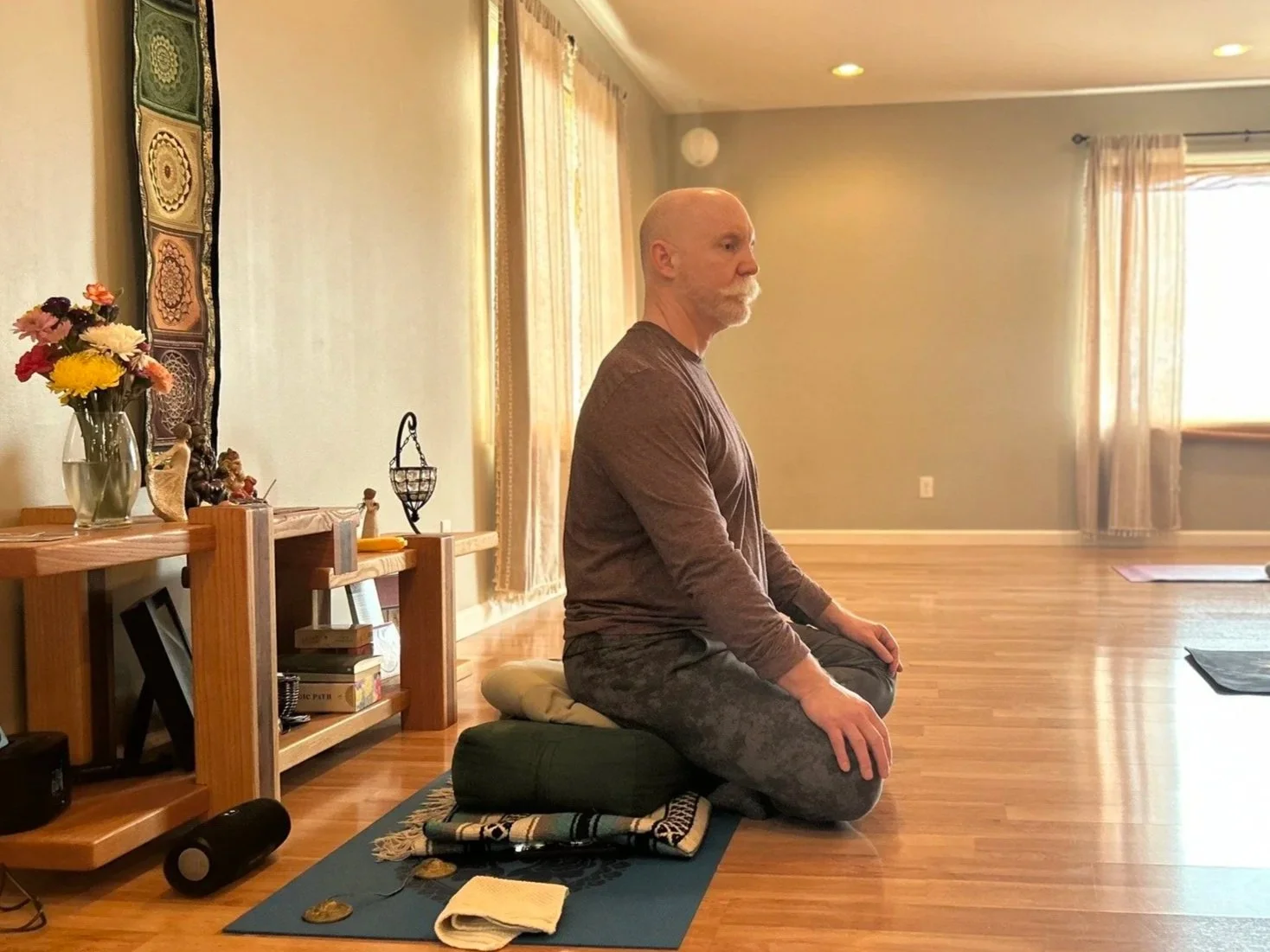
Matt Dickson is a Clinicial Hypnotherapist and RYT500. One of his most recent passions is supporting his students through the unique combination of Hypnosis and Yin Yoga, which adds the deep relaxation of Yin postures to the mindful intention of hypnosis to help relieve tension in both body and mind.