
Where We Rest the Gaze
How Attention Shapes What We See
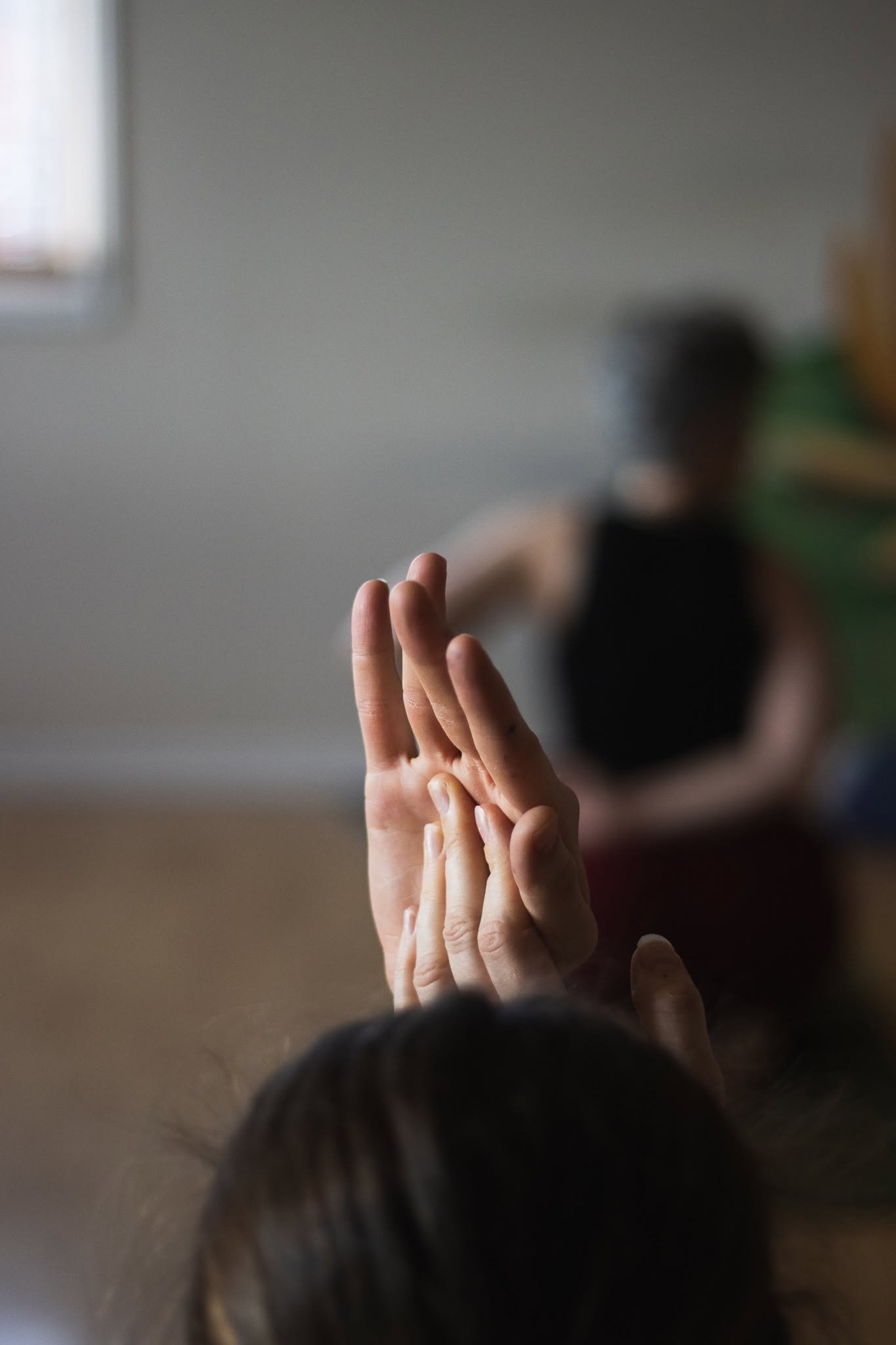
Most of us could walk from bed to the kitchen in the dark. We know the turn of the hallway and the light switch by feel. Familiarity is a gift, and it carries a quiet cost: what we know well, we stop seeing.
Training the attention has always been one of the most essential practices of yoga. What we look for changes what we see, and our practice asks us to choose where we look.
Drishti: A Gaze With Direction
In asana, we tend to rest the eyes softly on a single point: the tip of the nose, the horizon past the front hand. This is drishti, the gently focused gaze. Drishti is a technique used regularly in balance postures, as a steady gaze steadies the body. Where the eyes go, the mind tends to follow. When we give the gaze a direction, we give the whole self a direction, and we begin to sense that attention is a resource we can place with care.
Dharana and the Selective Mind
Patanjali names dharana, concentration, as the sixth limb of yoga: the binding of the mind to one place. Because attention is selective, we have a say in what it selects. When we choose our focus with intention, the mind gathers around it. This is the often unseen power of dharana.
Beginner's Mind on a Familiar Mat
Mindfulness can be defined simply as actively noticing new things. This small act can be linked to greater engagement and presence. As practitioners, we return to the same postures for years. How does the breath move in practice this morning, in this moment? Where does the weight land in the feet? One new noticing, however small, keeps the practice alive and new, second by second.
Everyday Wonder
Wonder lives closer than we imagine. When we spend time noticing everyday nature, such as a tree by the bus stop or a weed in the pavement, we often feel more joy and a deeper sense of connection. Some even called these experiences “awe walks.” Pratyahara, the fifth limb, describes a gentle mastery in which the senses come to serve our attention. A leaf on the sidewalk becomes a teacher the moment we choose to see it.
Svadhyaya: What Keeps Catching Our Eye
Svadhyaya, self-study, invites us to notice what draws the eye, and then what draws it again and again. These recurring pulls reveal our values and the particular way each of us meets the world. Over time, what we notice becomes a kind of autobiography, written in our glances.
A Short Practice: Drishti for the Day
We invite you to try this once a day for a week.
Set an intention. Choose one thing to notice today.
Let it find you. Move through the day as usual, holding the intention lightly.
Pause. When it appears, stop and become aware of your breath.
Ask one question. What drew me here?
Carry it forward. Share what you found with someone you love, or note it in a journal.
The Practice Lives Within Us
Each time we come to the mat, we practice placing attention with care, and this skill travels. The same gaze that steadies us in a posture can rest on a puddle reflecting the sky or a friend's face. The world has been offering itself all along. When we choose to look, we receive it.